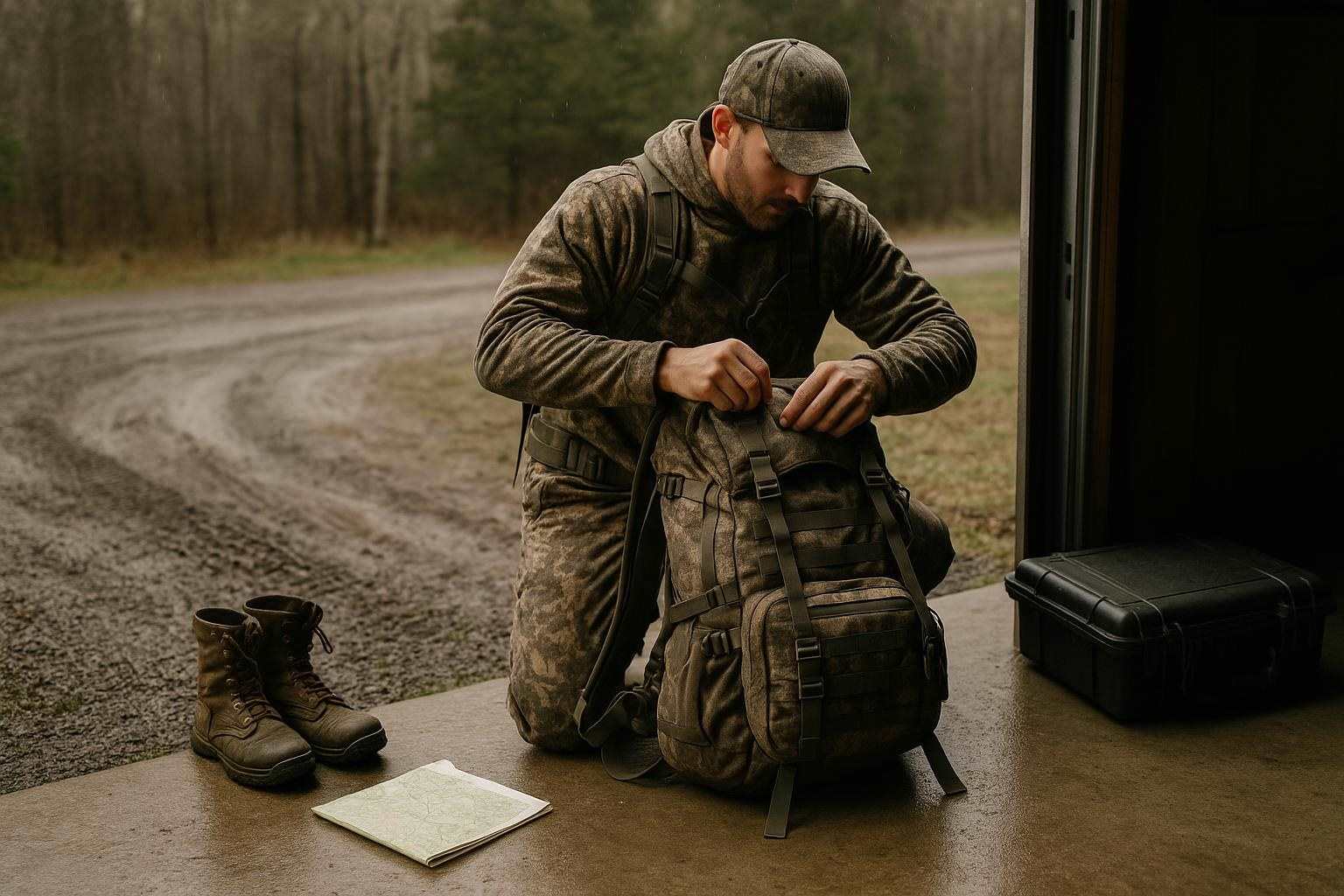
A strap breaks as you settle into a stand, the flashlight is missing, and the license rules on your phone no longer match the season. None is dramatic, but each can turn a safe, legal outing into a wasted one. Good preparation is not a shopping spree or a pile of gadgets; it is a few decisions made early enough to correct mistakes. A practical routine leaves more attention for shot judgment, landowner courtesy, animal recovery and care for the land.
Start with the rules, not the gear
Regulations come first because they can change between seasons and differ by state, management area, species and method of take. Check the current official regulations for the places and animals you intend to hunt. Confirm license requirements, season dates, tags or permits, blaze-orange rules, legal shooting hours, transportation requirements and reporting procedures.
Do not rely on a saved screenshot, last season's booklet or advice from someone hunting a different unit. Keep a current digital copy if service is reliable, but carry required printed documents and know how to access them offline. If a rule is unclear, contact the responsible wildlife agency before you go. Guessing is a poor substitute for verification.
Make equipment earn its place
Lay out your actual kit well before opening day. Separate essentials from conveniences: identification and permits, communication, navigation, weather-appropriate clothing, water, food, first aid, a light, lawful fire-starting equipment, field-dressing tools and a way to pack out waste. The list depends on terrain, distance from the vehicle, weather and whether you hunt alone.
A lighter setup may suit a short walk near a road, while a stronger carrying system is worth the weight in remote country. Choose equipment for the actual hunt, not its appearance or online popularity. Test buckles, zippers, batteries, boot fit and pack adjustments at home. A new item is not an improvement if it adds noise, discomfort or another failure point.
Give firearms and other weapons a quiet inspection
Maintain firearms methodically and conservatively. Unload the firearm completely, keep ammunition separate during inspection, and follow the manufacturer's cleaning and storage instructions. Look for corrosion, damaged slings, loose sights, worn cases and bore or action problems that may require a qualified professional. Do not make an unfamiliar modification just before the season.
After months in storage, confirm that an optic still holds zero during a safe, lawful range session. The goal is to establish reliable function and safe operation, not to chase a perfect group or make dramatic adjustments. Give archery equipment the same attention: inspect strings, cables, rests, nocks and broadheads, replacing questionable components before practice becomes urgent.
Practice the decisions that matter in the field
Accuracy is only part of readiness. Practice mounting or drawing without sweeping another person, identifying a safe direction, using a sling correctly, moving through likely terrain and communicating with a partner. Rehearse what you will do if visibility changes, an animal is wounded, a companion is injured or the route out takes longer than expected.
Ethical hunting depends on restraint as much as skill. Set personal limits before you are tired, cold or excited. Know the range at which you can make a responsible shot under expected conditions, and pass when the angle, background or identification is uncertain. Plan recovery before taking the shot by considering terrain, weather, available help and legal transport. A fast opportunity is never a reason to abandon judgment.
Use a short checklist, then test it
Make the checklist specific to your hunt. Run through it several days before departure, then complete a final check the night before.
– Current license, tags, permits and regulations verified
– Firearm or bow inspected, safely stored and tested as appropriate
– Required safety clothing, navigation, light, communication and first aid packed
– Weather, route, access permission and emergency contacts reviewed
– Water, food, layers and footwear matched to the forecast and terrain
– Field-care tools, game bags and waste containers ready
– Vehicle fuel, tires and recovery supplies checked
– Hunting partner or household contact given the destination and return plan
The checklist should reveal gaps, not create false confidence. A charged phone does not replace navigation, and a map does not guarantee that a route is open or accessible.
Leave the ground better than you found it
Preparation includes habitat stewardship and respect for people who share the landscape. Confirm access permission, identify gates and parking limits, and avoid blocking roads or damaging wet ground. Know how the agency handles carcass waste, bait, fires and invasive plants in your area. Pack out packaging, tape and broken equipment, and follow local rules and landowner instructions for gut piles.
Watch for erosion, disturbed nests, closed areas or conditions that make travel unsafe. A responsible decision may be turning around, postponing the hunt or choosing a less sensitive route. Conservation helps maintain trust, wildlife habitat and future access.
Build a routine that reduces surprises
The most useful pre-season habits are repeatable: verify the rules, inspect what you own, practice safe handling, plan recovery and account for the land. Buy only when a real weakness remains. Sometimes that means replacing a damaged strap or unreliable light; sometimes it means more practice, a better map, a service appointment or a simpler pack.
That distinction saves money and attention. It keeps opening day focused on sound decisions instead of preventable repairs, rushed searches and uncertainty about what is legal. Recheck regulations and local conditions close to the hunt, because preparation is a process, not a one-time claim that everything is ready.